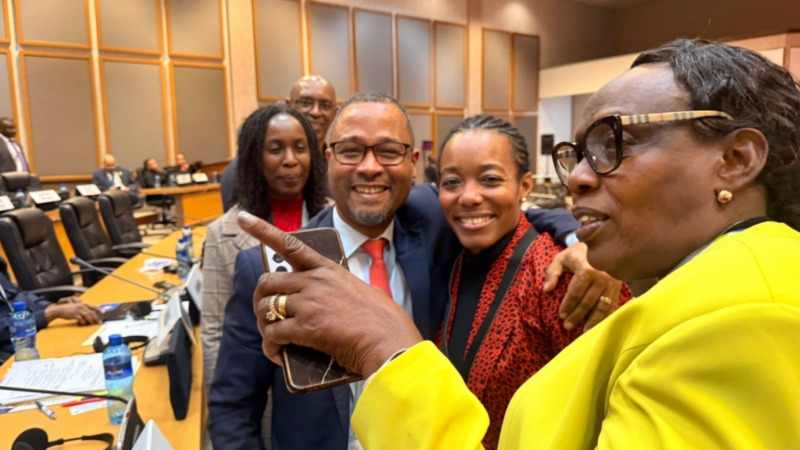
*Johannesburg erupts in applause as Dr. Zanetor Agyeman-Rawlings makes history in the Pan African Parliament chamber*
The gavel had barely fallen before the room broke into a sustained ovation. By 131 to 51, Dr. Zanetor Agyeman-Rawlings has secured the role of 2nd Deputy President of the Pan African Parliament, becoming the first woman from the West African Caucus to hold the position since the institution was established in 2004.
The 2nd Deputy President functions as the equivalent of a 2nd Deputy Speaker. In practice, that puts Dr. Agyeman-Rawlings on the Parliament’s presiding bureau alongside the President and two other deputies.
She will help set the legislative agenda, chair sessions when the President is absent, and oversee committee coordination across the 55 African Union member states represented in Midrand, Johannesburg.
The position carries weight in shaping policy debates on trade, peace and security, and regional integration.
For decades, the West African bloc has been one of the largest regional caucuses in the PAP, yet it had never placed a woman in this tier of leadership. Dr. Agyeman-Rawlings’ election breaks that pattern and signals a shift in how regional representation is being negotiated inside the AU’s legislative arm. Her medical background and her tenure as MP for Klottey Korle in Ghana also bring a public health lens to a chamber that has traditionally been dominated by diplomats and career politicians.
The chamber’s murmurs of “there is something in a name” weren’t accidental. As the daughter of Ghana’s former President Jerry John Rawlings and former First Lady Nana Konadu Agyeman-Rawlings, she enters with a legacy tied to Ghana’s democratic transition and Pan-African advocacy in the 1990s.
She campaigned on her own record: chairing Ghana’s parliamentary select committee on security and intelligence and pushing for greater youth and women’s participation in governance across ECOWAS.
Her immediate mandate will be to bridge language blocs within the Parliament, especially between Anglophone West Africa and the broader Francophone and Lusophone delegations. Insiders say she’s already indicated a priority focus on harmonizing cross-border health protocols and strengthening parliamentary oversight of the African Continental Free Trade Area agreement.
The 51 dissenting votes suggest the race wasn’t without contest, reflecting ongoing debates about regional balance and generational change within the PAP.
Still, the 131-vote margin gives her a clear mandate heading into the next two-year session.
A quiet but deliberate message went out from the Ghanaian delegation shortly after: this isn’t just a personal milestone, it’s a precedent for the next cohort of women parliamentarians across West Africa.
Report by PKB