*MP Kojo Oppong Nkrumah Sounds Alarm on Worsening Youth Unemployment, Questions Govt Job Programs*
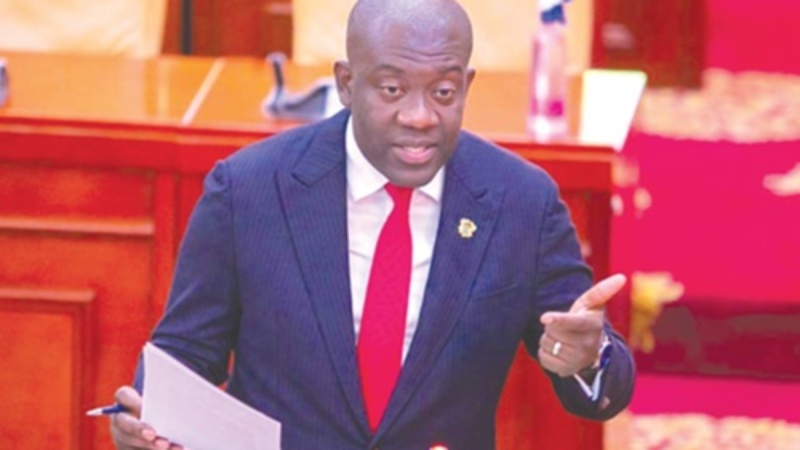
Ofoase-Ayirebi MP Mr Kojo Oppong Nkrumah has cautioned that Ghana’s youth unemployment crisis is deepening, citing new Ghana Statistical Service data and questioning the effectiveness of government’s flagship job initiatives.
Addressing Parliament in a statement on youth unemployment, Oppong Nkrumah said the issue is no longer “a general problem with a youth dimension” but “a youth problem” that is getting worse.
Quoting GSS Quarterly Labour Force Statistics, the MP noted that unemployment among Ghanaians aged 15 to 24 rose from 32% in December 2024 to 32.5% by 3 2025.
In Greater Accra, the figure hit 49.3% in 3 2025: nearly one in two young people in the capital unemployed.
Seven out of every ten unemployed Ghanaians are under 35, he added.
According to him, the GSS classifies 1.34 million youth aged 15-24 as not in Education, Employment, or Training.
Under the National Youth Policy definition to age 35, that number climbs to 1.95 million. “Nearly two million young Ghanaians are neither earning nor learning,” Oppong Nkrumah told the House.
The MP acknowledged that no government, including the previous NPP administration, has fully solved unemployment. But he pressed government on current interventions: the 24-Hour Economy, One Million Coders Programme, Adwumawura Programme, and the pledge to create 250,000 jobs annually.
He flagged delays and gaps. The 24-Hour Economy launched in July 2025, but the Authority Bill only reached Parliament in February, and concerns remain that it lacks provisions for the promised shift system or employment expansion.
The One Million Coders Programme saw 90,000 applications in 48 hours, showing “hunger among young people.” Yet by November 2025 its website went offline before relaunching to onboard 30,000 in the first cohort.
On Adwumawura, which targets ten thousand businesses yearly, only 475 entrepreneurs had received grants by March 2026, eleven months after launch.
Oppong Nkrumah pointed to the 12 November 2025 incident at El-Wak Stadium, where 21,000 youth gathered for a Ghana Armed Forces recruitment. Six died in a stampede and five entered intensive care, all competing for 2,000 slots. “We have a labour market crisis which is getting worse,” he said.
The MP urged a shift from “slogans” to “feasible programmes” creating “dignified, productive, and well-paid jobs.” He proposed a
published delivery scorecards for every job programme, tracking beneficiaries, cost per job, time-to-placement, and retention.
Separating skills creation from job creation and funding both differently to avoid “manufacturing disappointment.”
He added that, shifting from sovereign financing to private mobilisation, with government de-risking and co-investing while private capital drives large-scale jobs.
Making apprenticeships the spine of youth employment through national certification, employer co-funding, and clear pathways to work.
He explained that, building a credible Labour Market Information System with district-level data on vacancies, skills gaps, and graduate absorption.
“The GSS data is clear. The youth unemployment problem is getting worse. The time to act is NOW,” Oppong Nkrah concluded.
Report by PKB